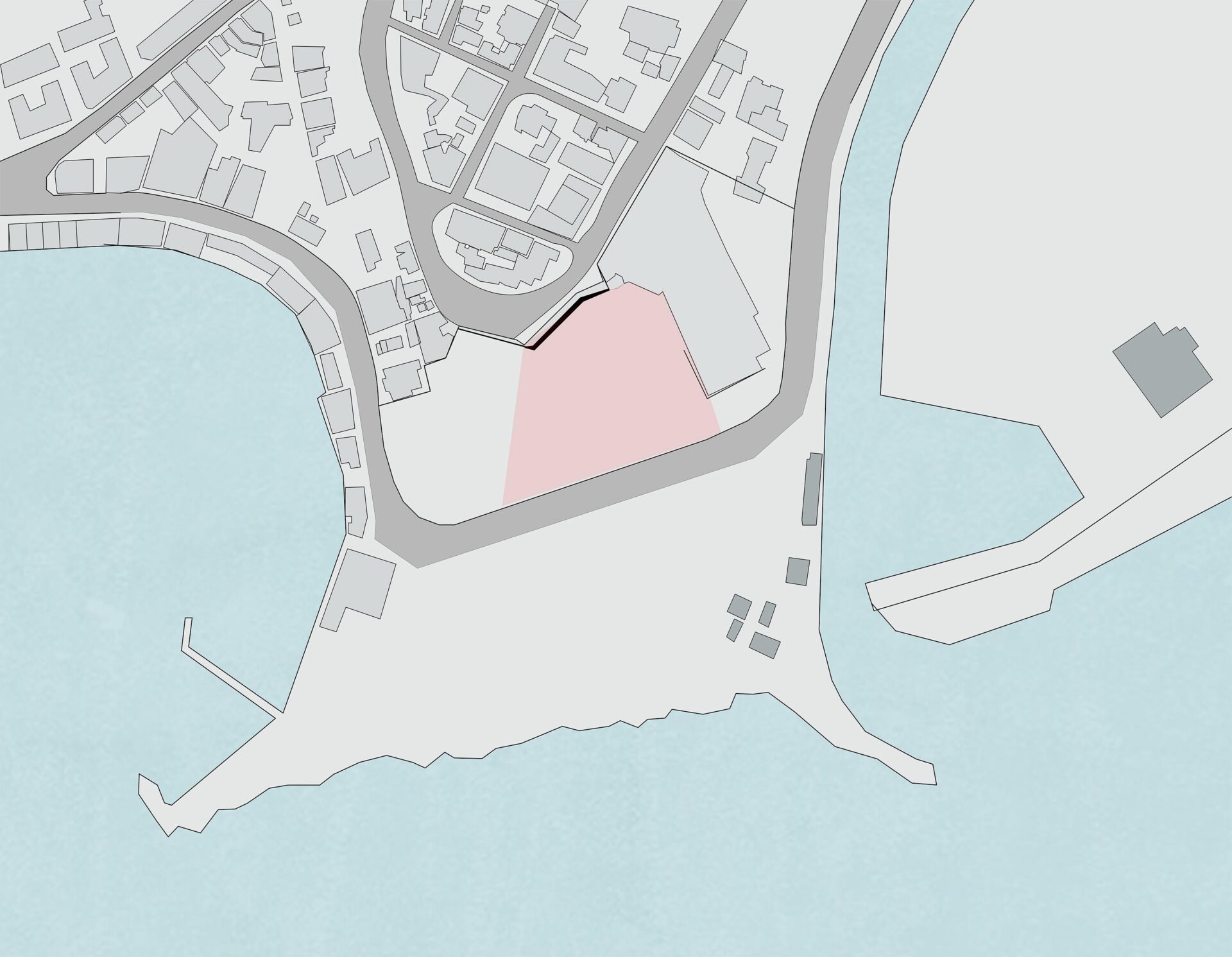
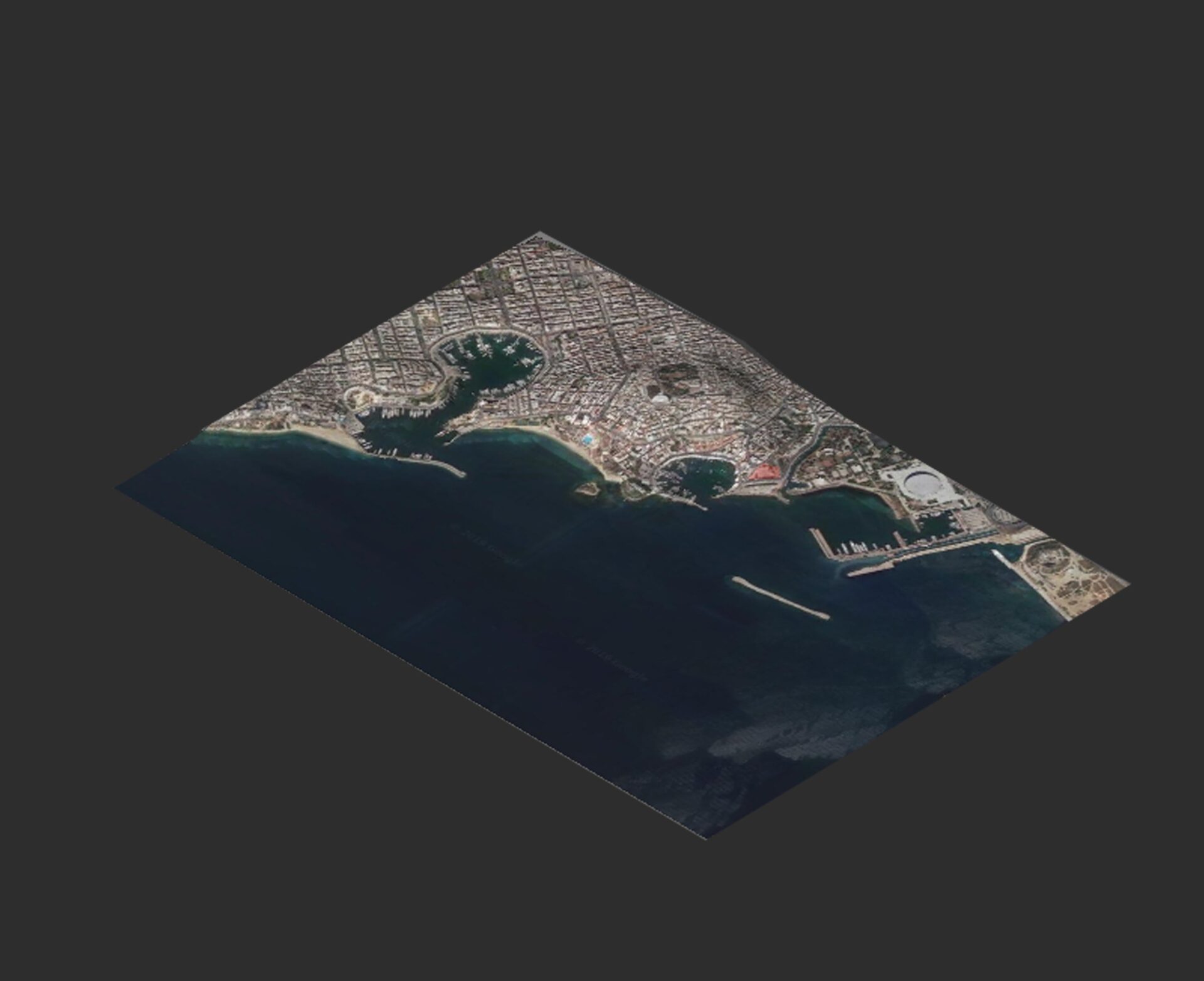
Piraeus, the largest port of Greece, is a continuation of the city of Athens. In Microlimano, the third natural port of Piraeus, access to the sea is impossible and swimming is not allowed due to seawater pollution. The reason for this project was, on the one hand, my sensitivity to the issue of pollution of the sea and, on the other, the importance of the sea for me as I swim throughout the year.
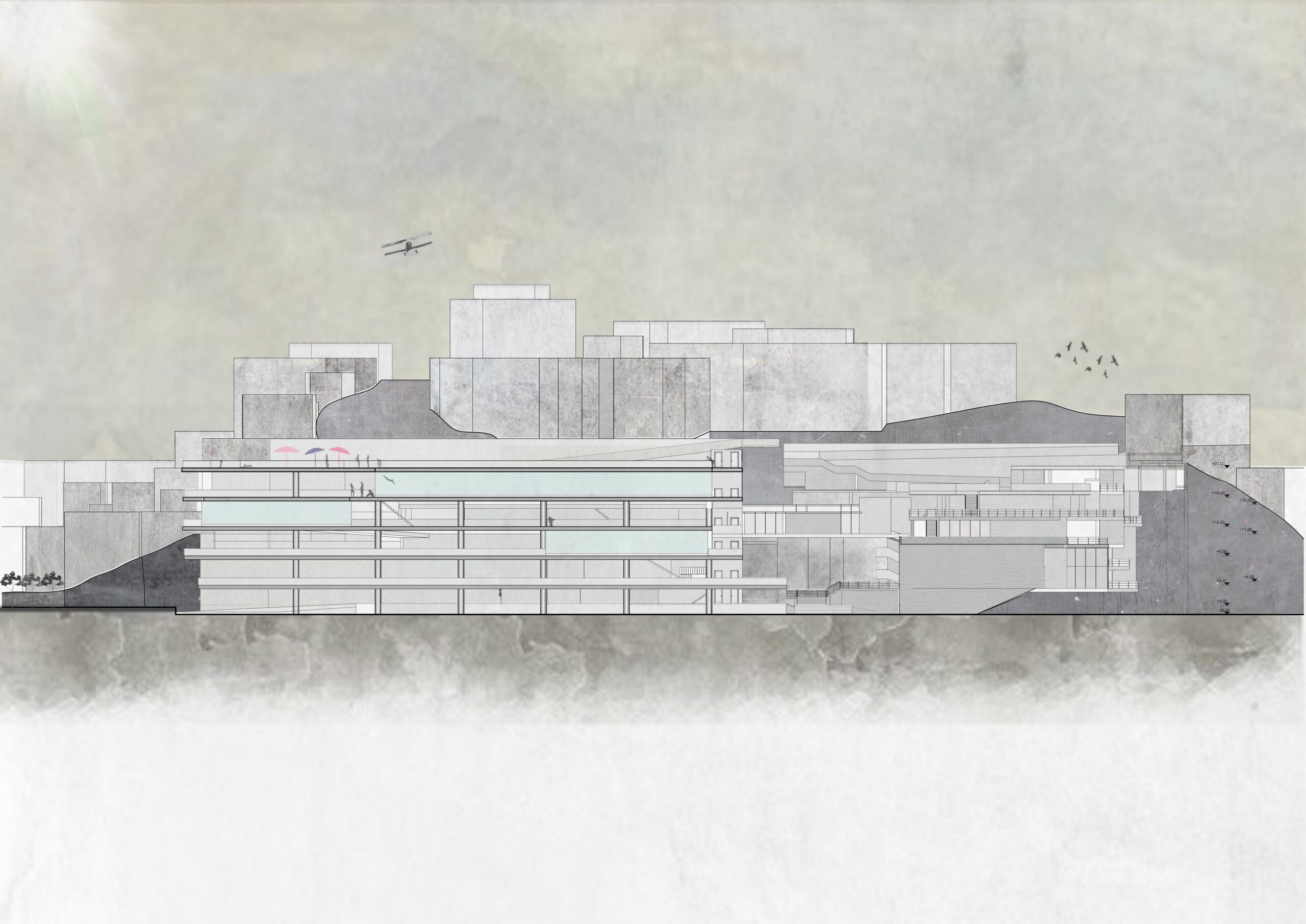
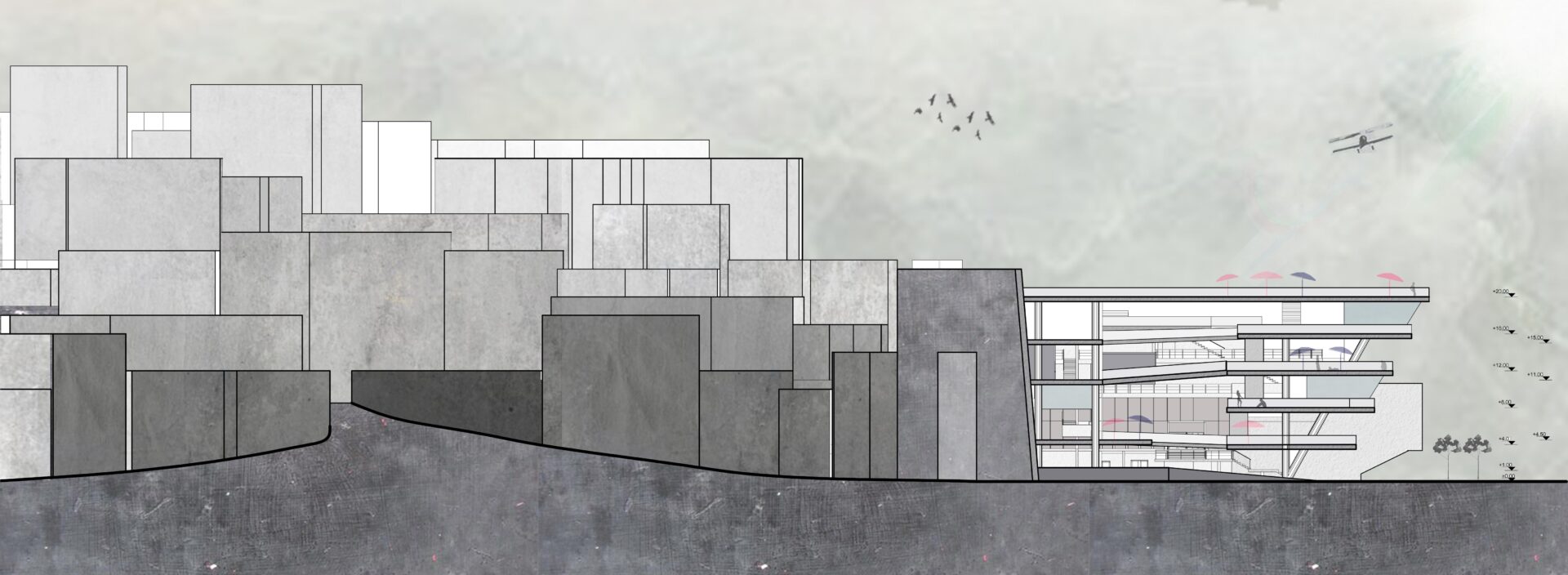
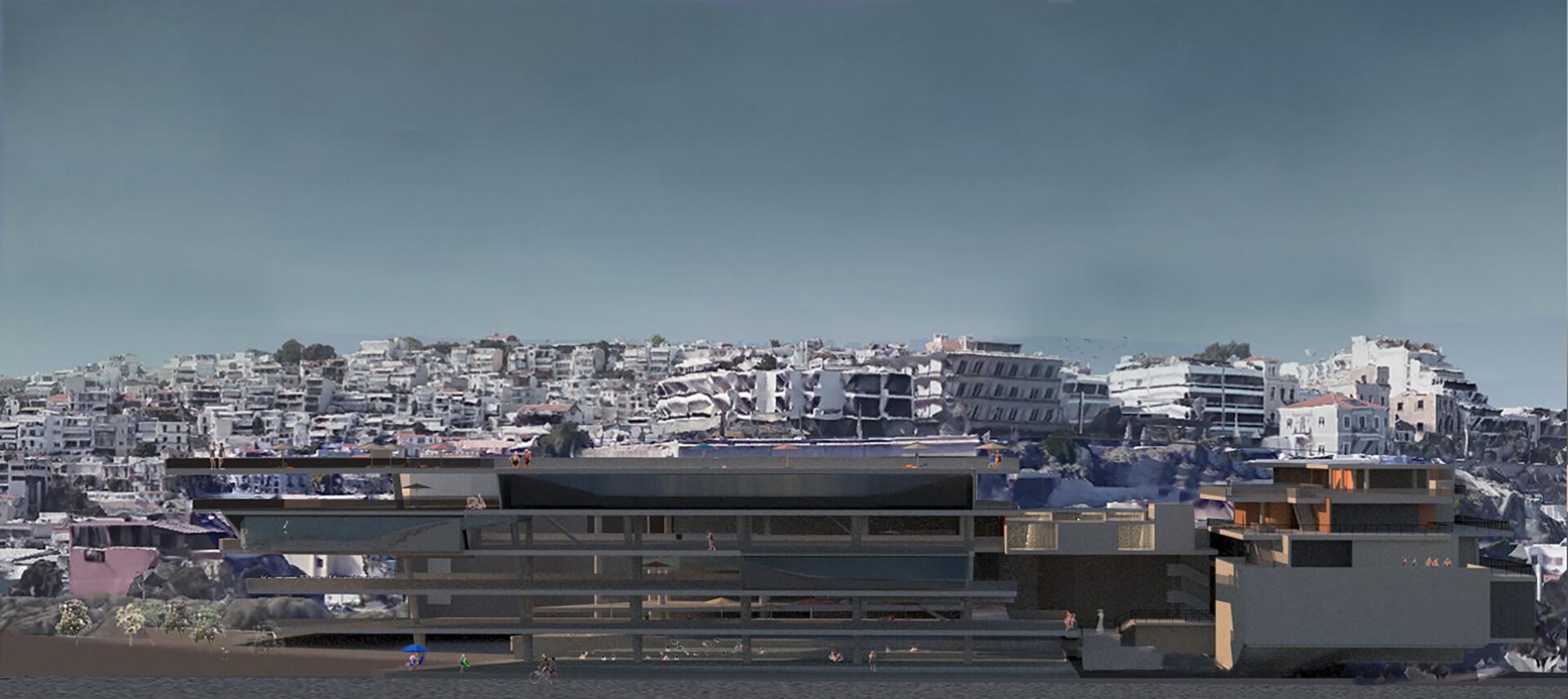
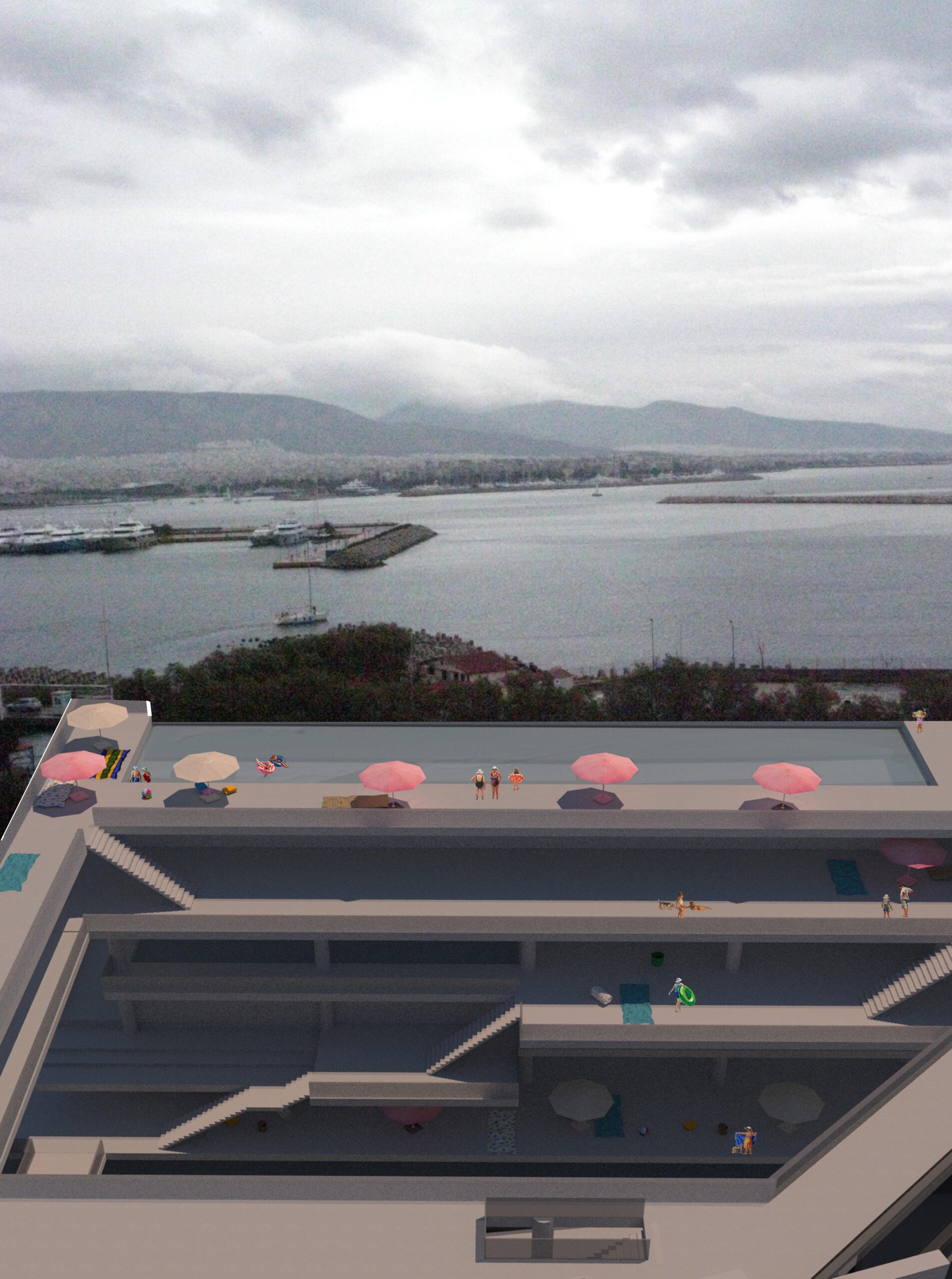
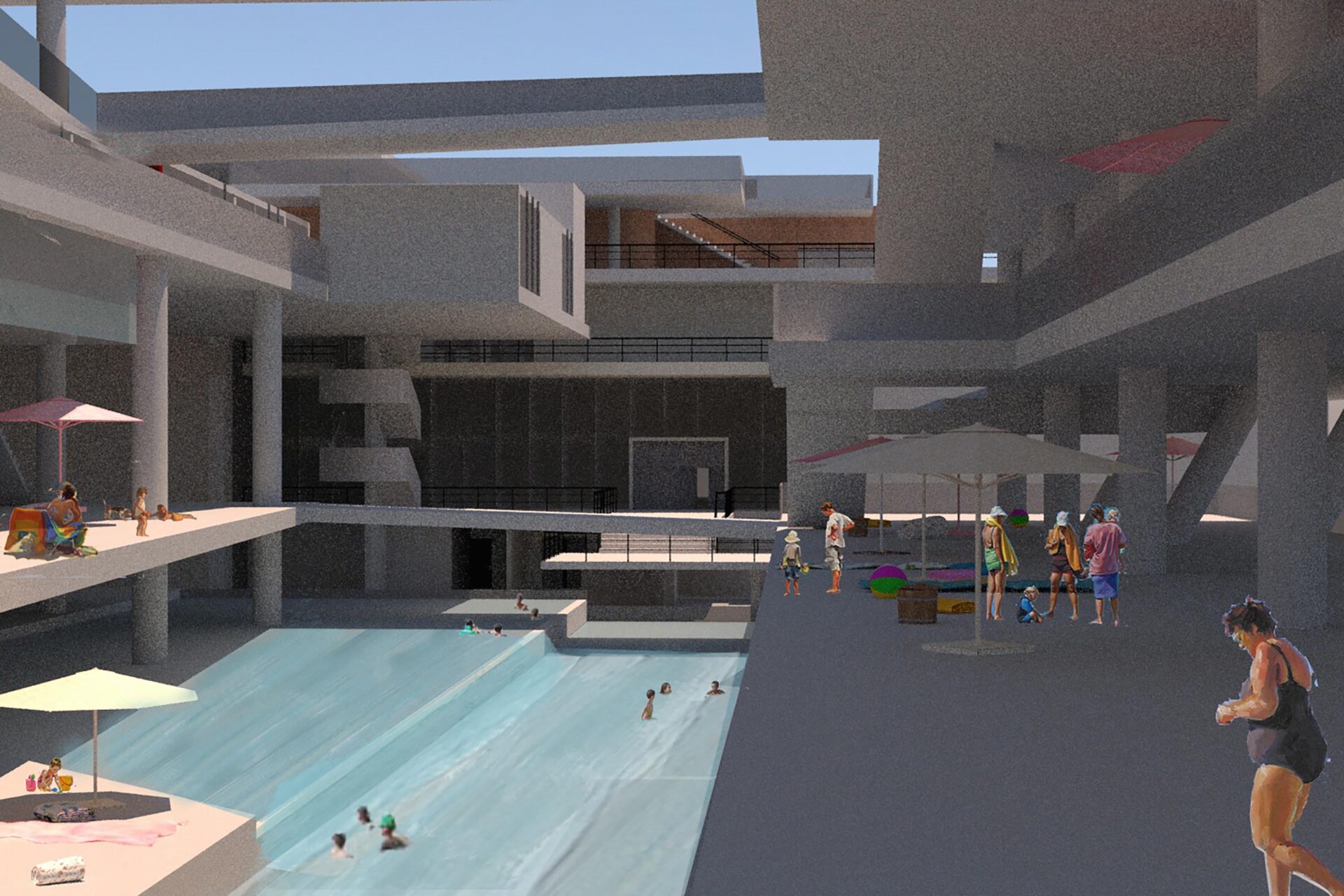
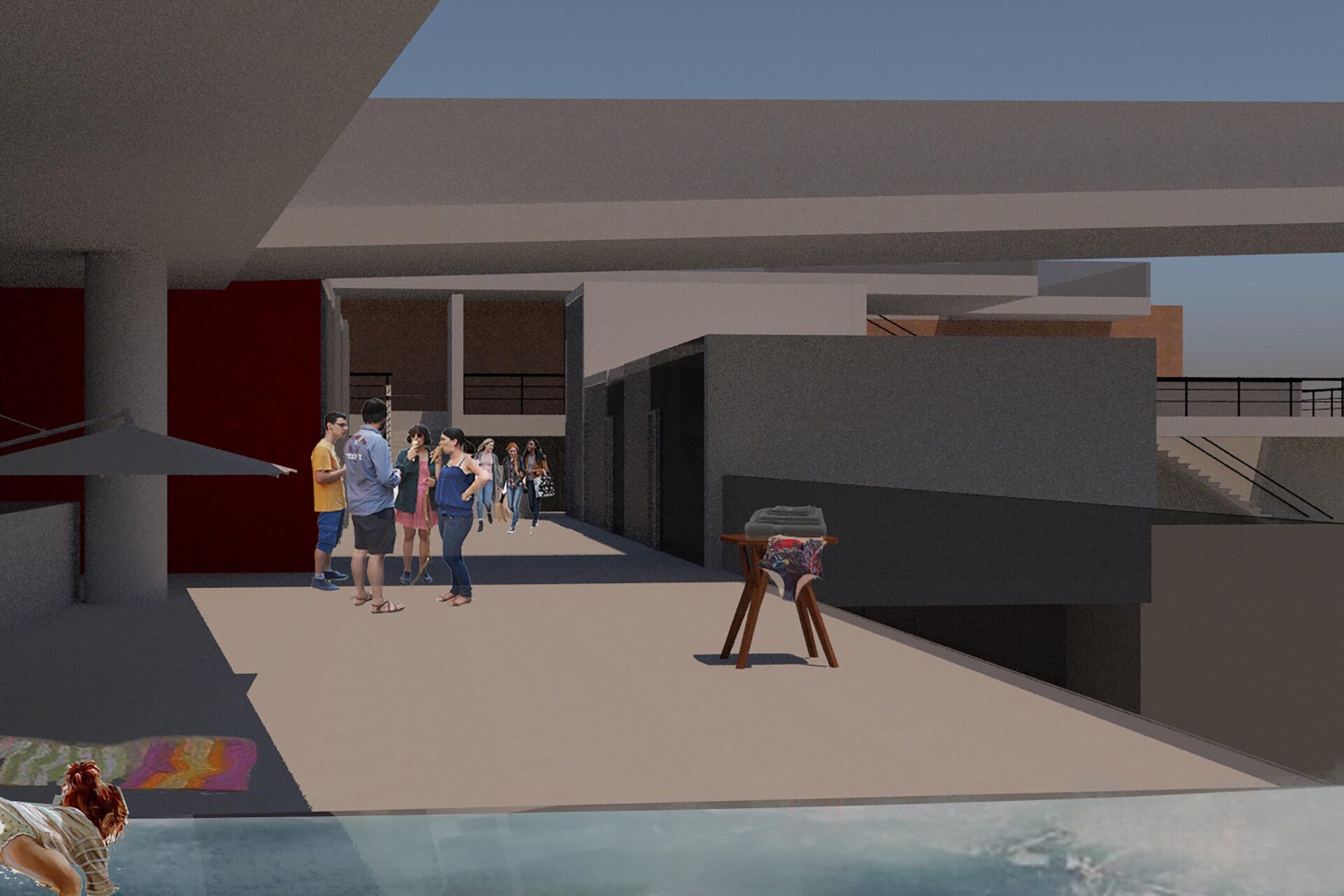
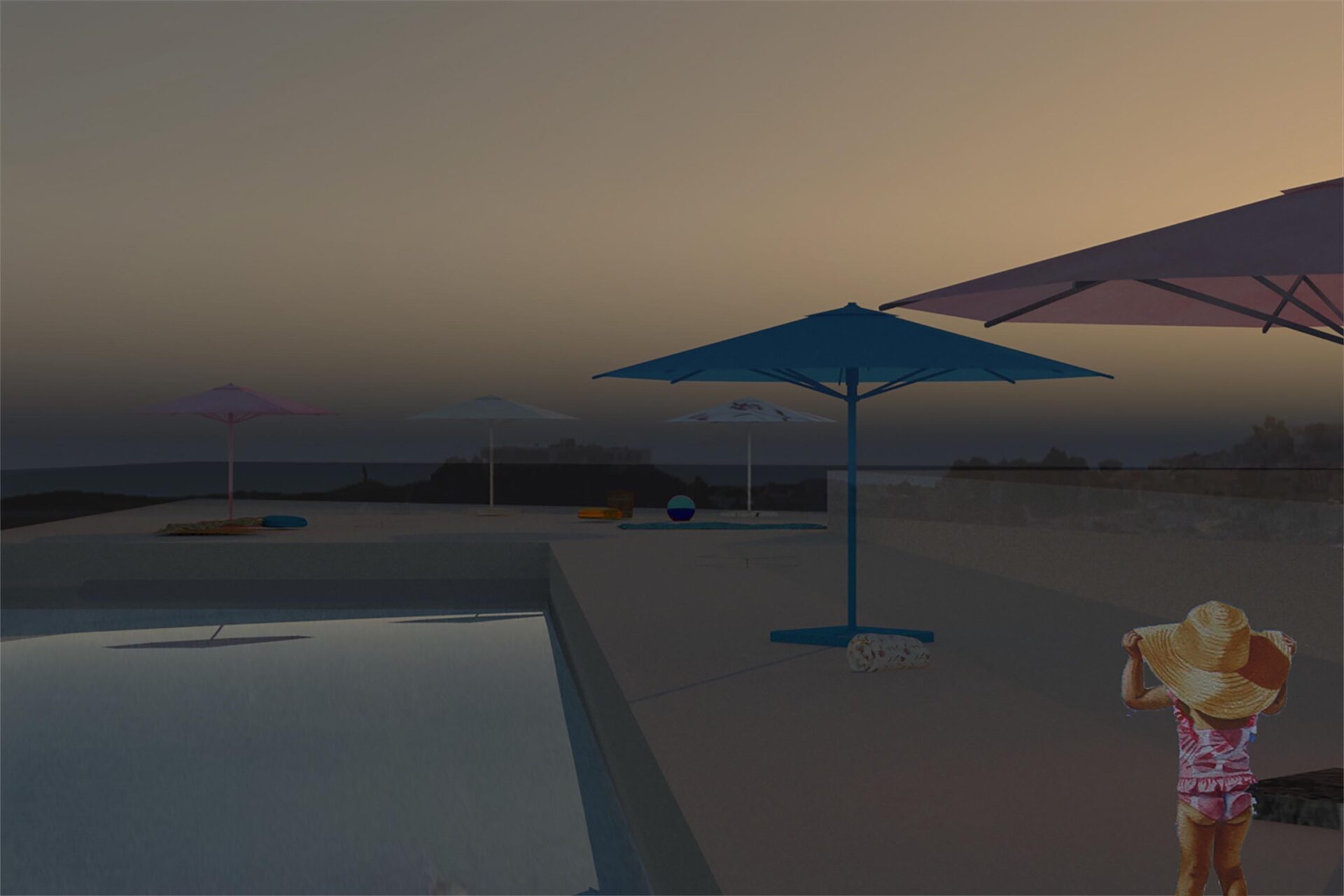
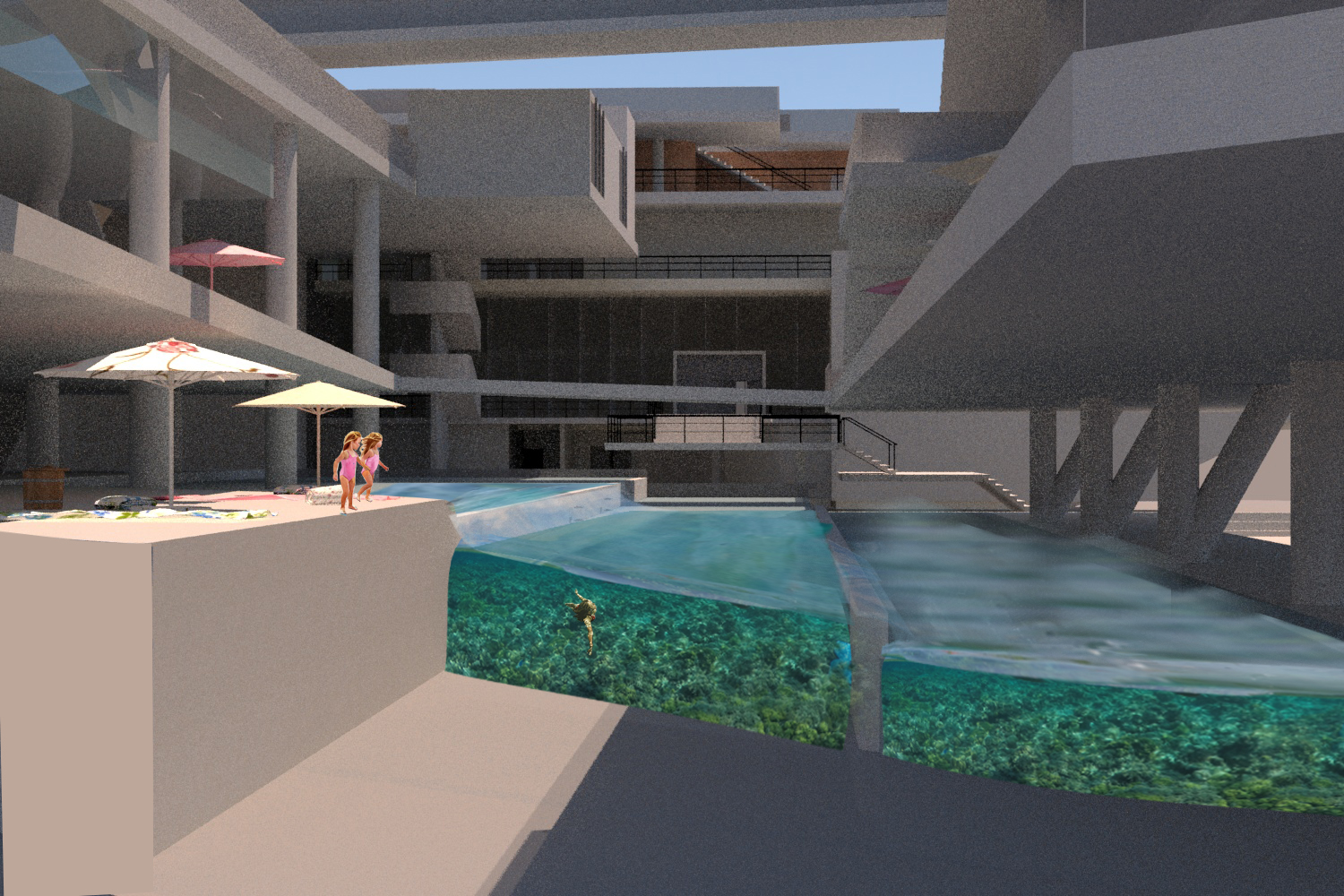
On the foot hills of Kastella, (which is an area o Piraeus, above Mikrolimano) there was an effort to design swimming pools. Seawater pools on various levels, which create a public move from Kastella to Mikrolimano and vice versa. The construction consists of two bars with a gap between them, which on the ground floor, connected with a large sea-water pool, allowing a view of sea scenes either from Kastella or Mikrolimano. From Kastella to the sea one can enjoy scenes from a seaside that does not the coast can be offered at this particular location Pools with pured seawater, umbrellas, coffee shops, cinemas make up this artificial beach. On this beach the visitor uses it, exploits the space as he believes. This gives a sense of freedom that would also give the void of the natural coast. Walking in Mikrolimano and observing the make-up, there are several scenes that you can see on a beach in front of you. The slide from the pools intensifies the extrovert, making the presence of bodies in the area strong.
The sea events of this location are popular between the swimmers, whohave the feeling that they are in contact with the sea and the city, as it happens between our own concrete construction and the sea in front of it. A strong relationship between the constuction and the sea creates interesting feelings of extroversion.
Construction is an attempt to overcome the issue of water contamination and ensure accessibility to the marine liquid component. In this way it is given to the area what belongs to it.This construction gives traces of the sea in the area where it was before. The sea was removed for the creation of the existing infrastructures about a hundred years ago.